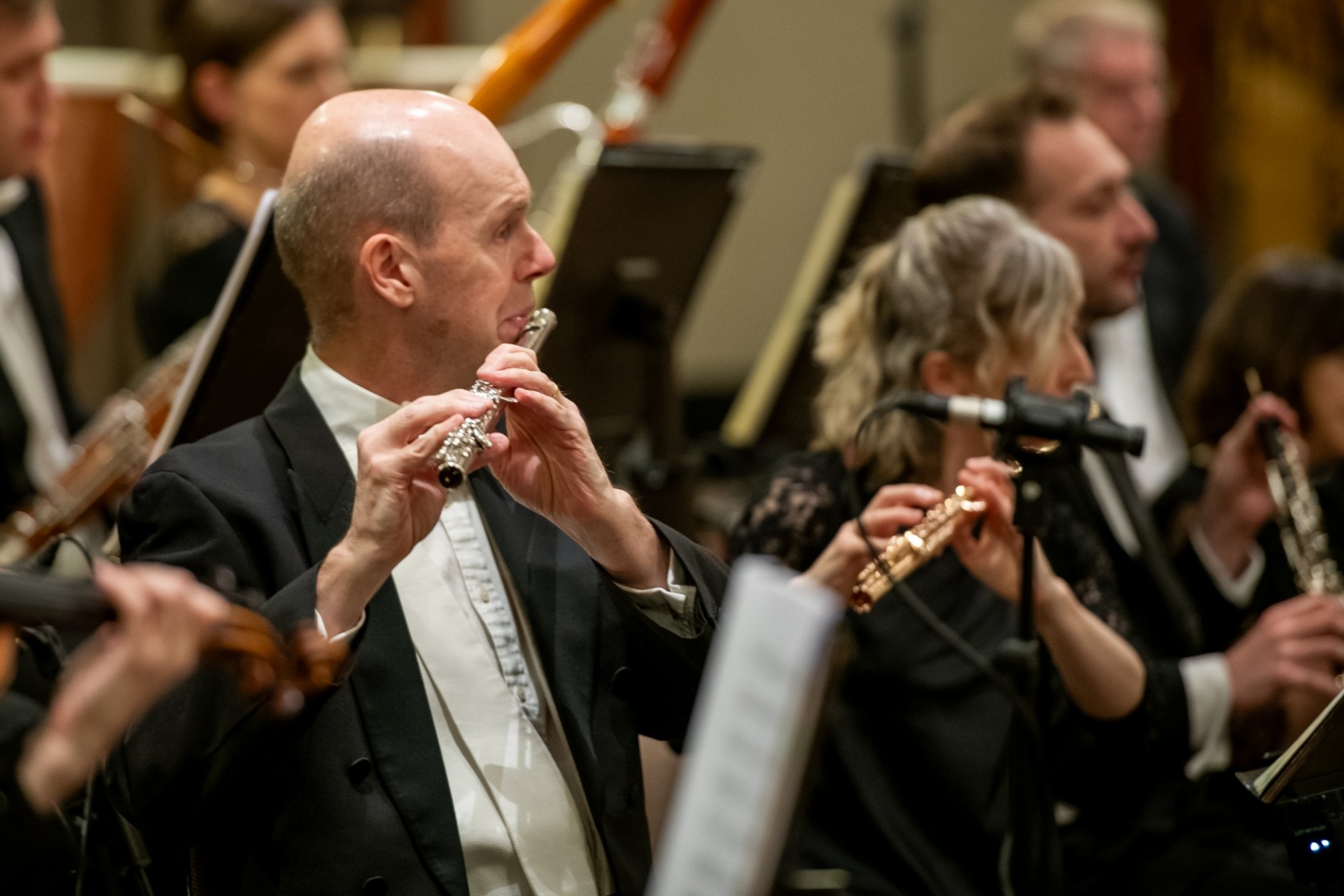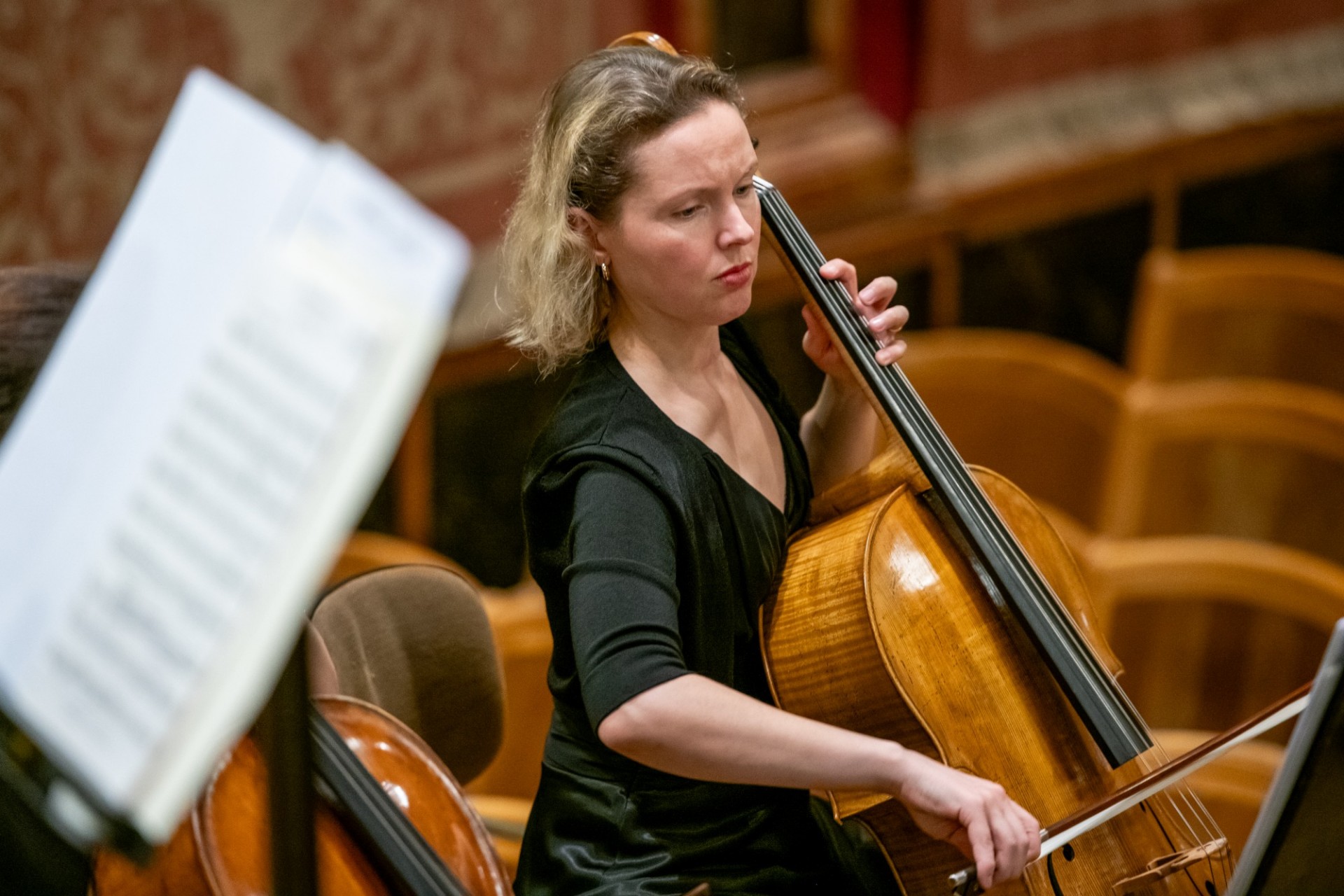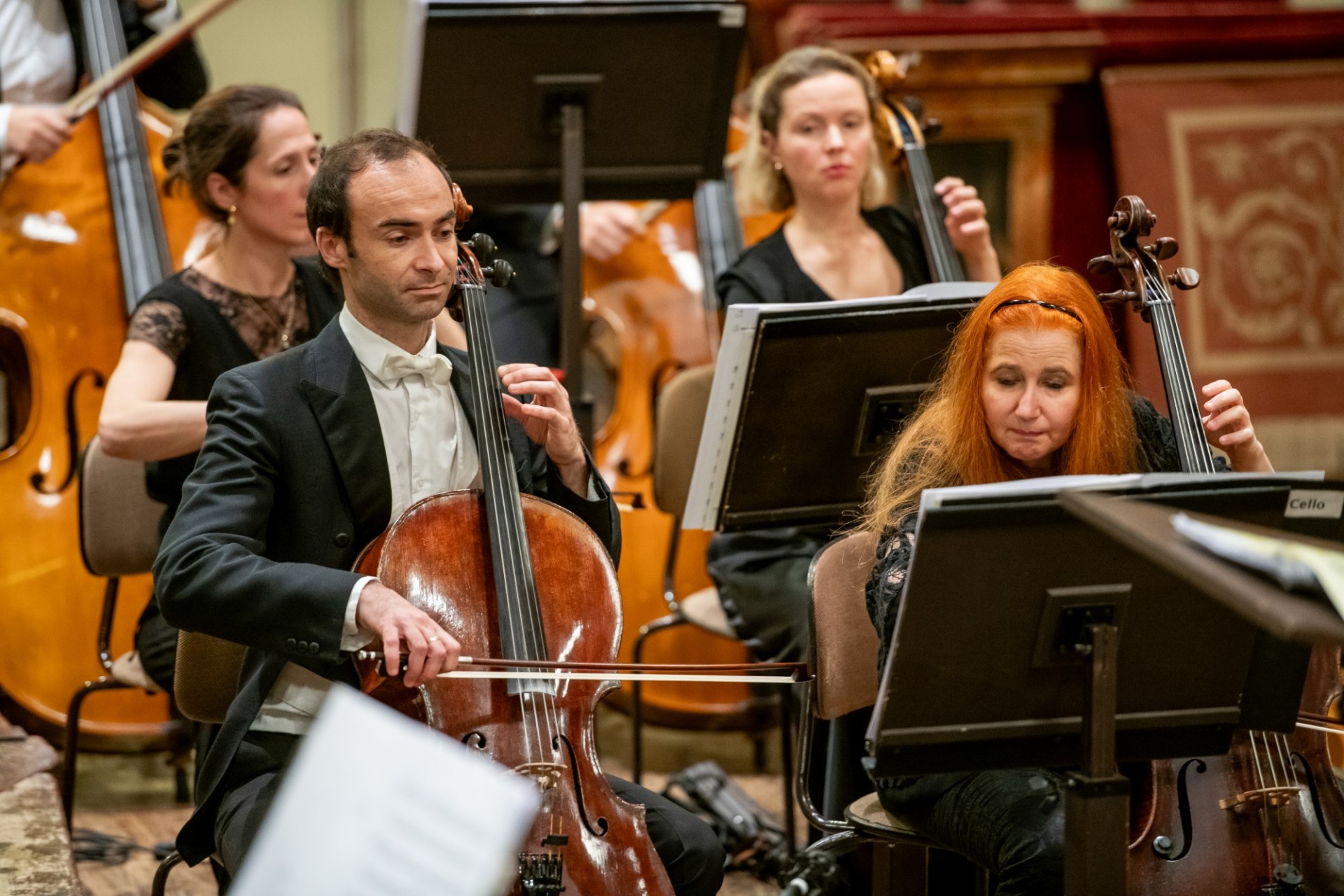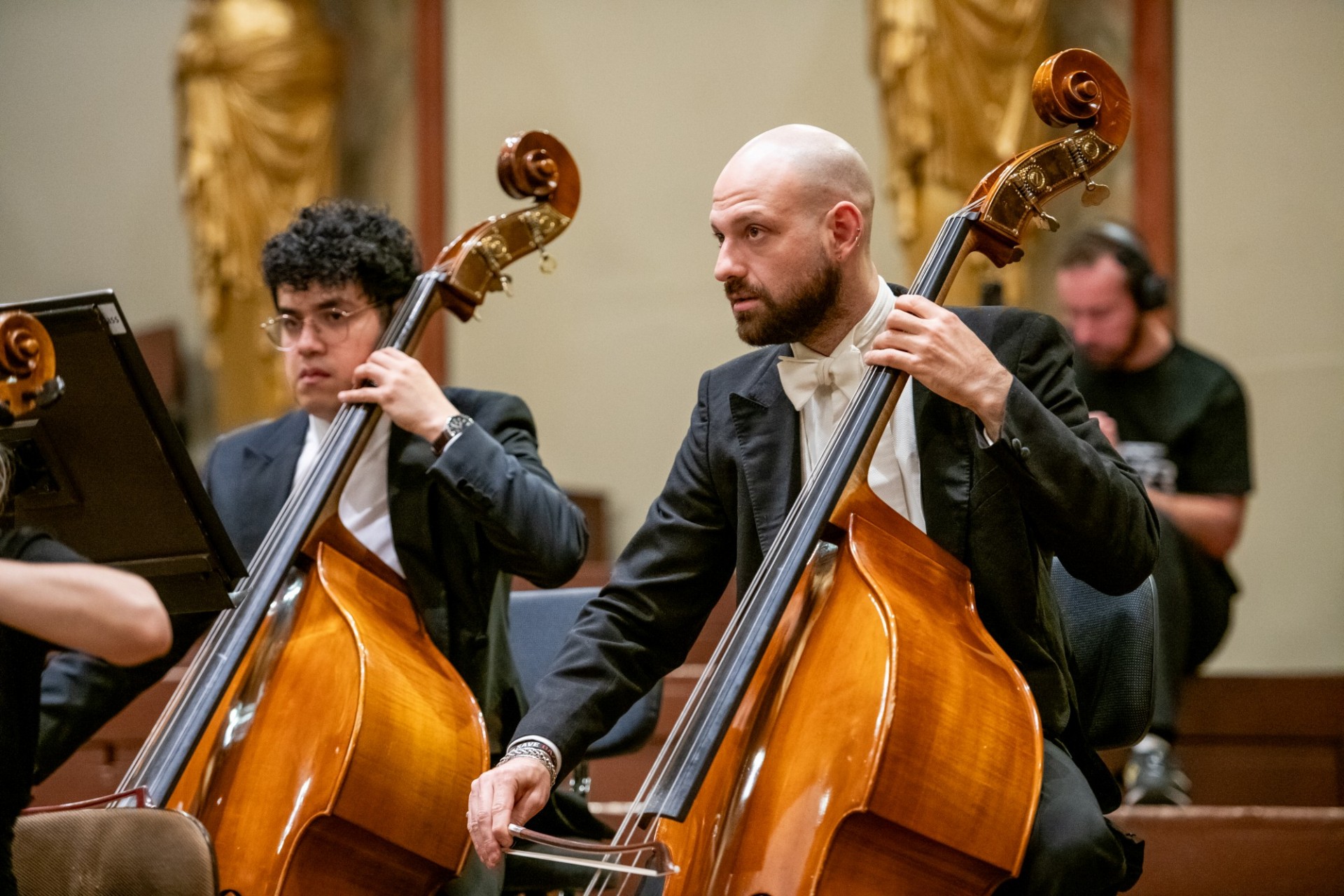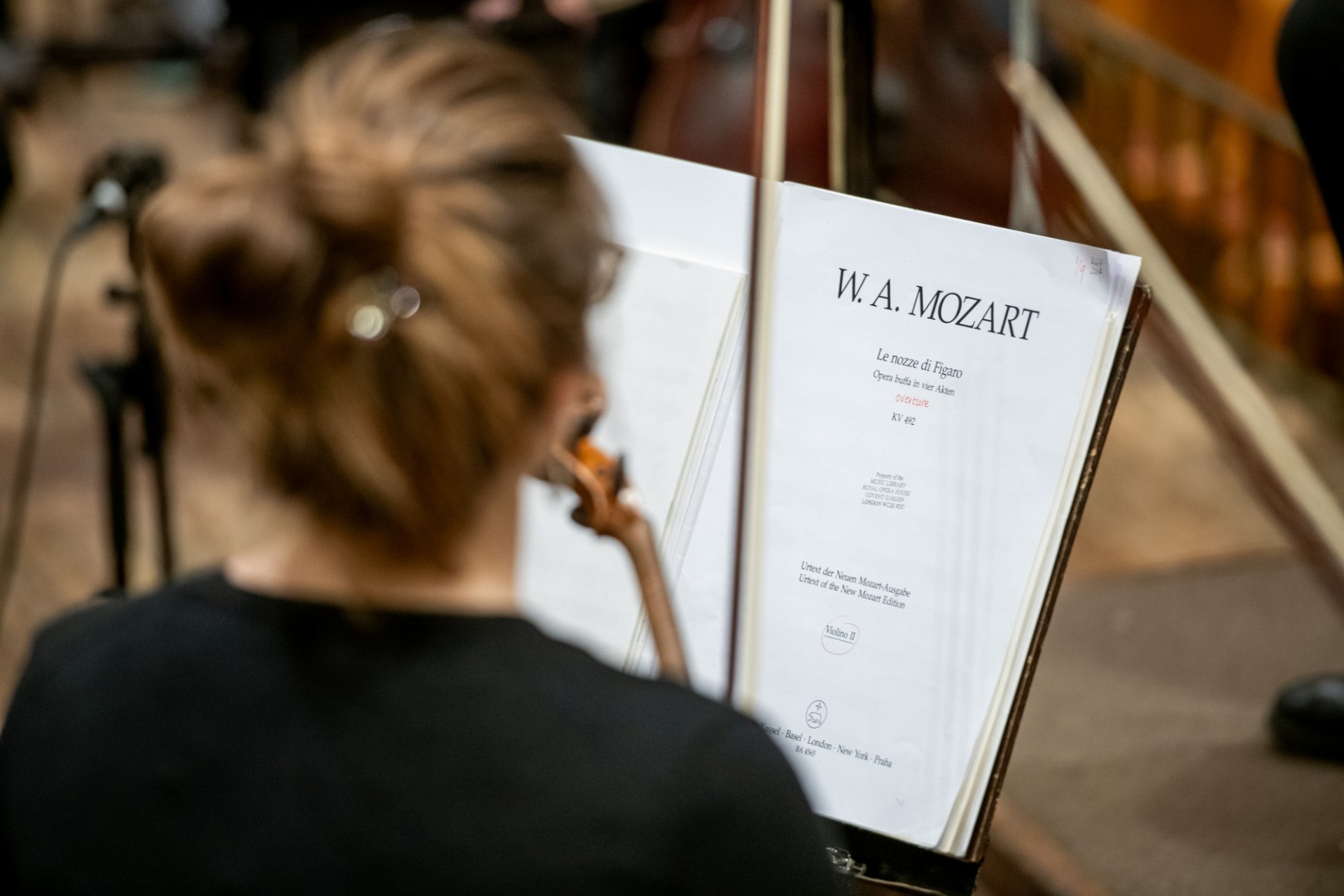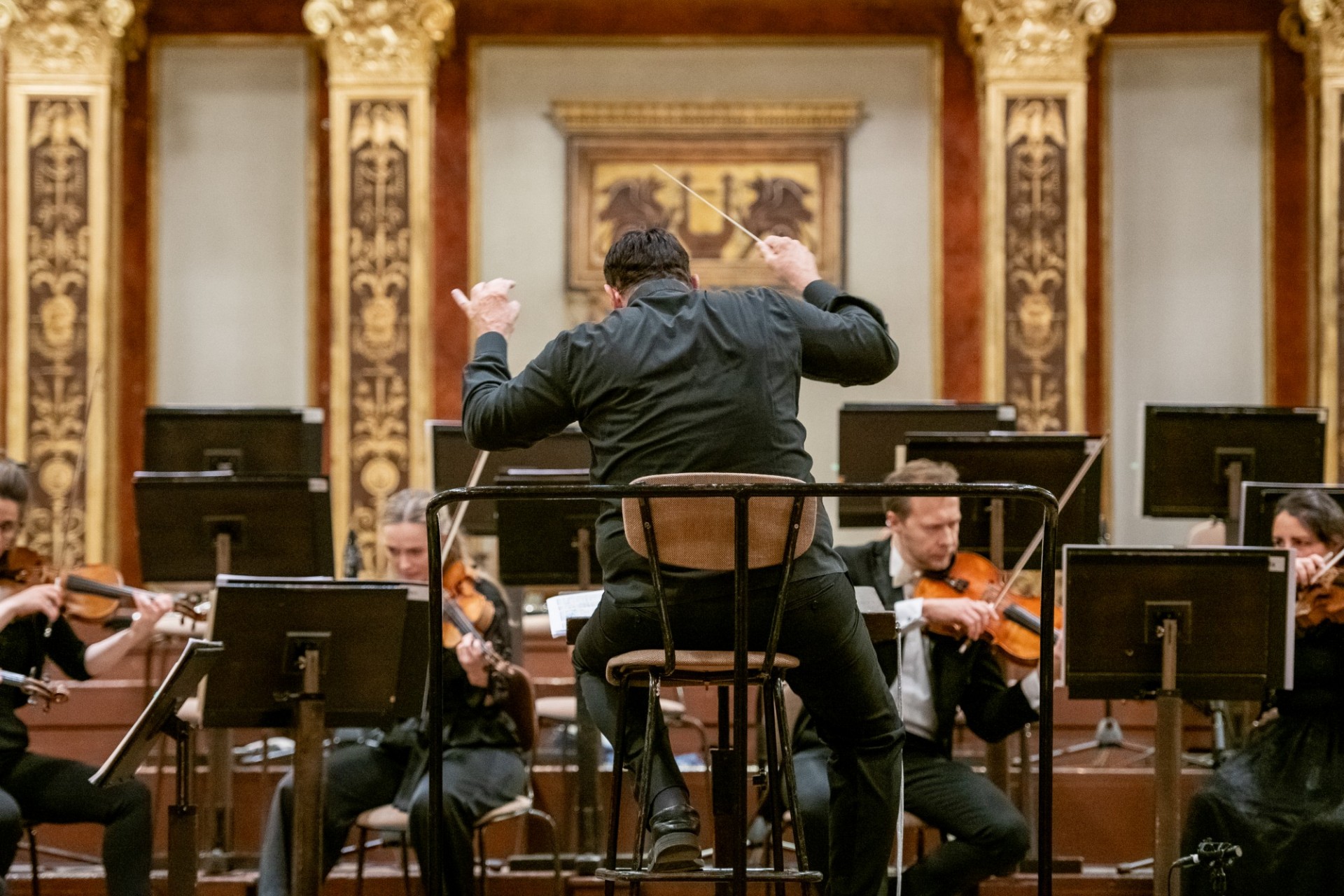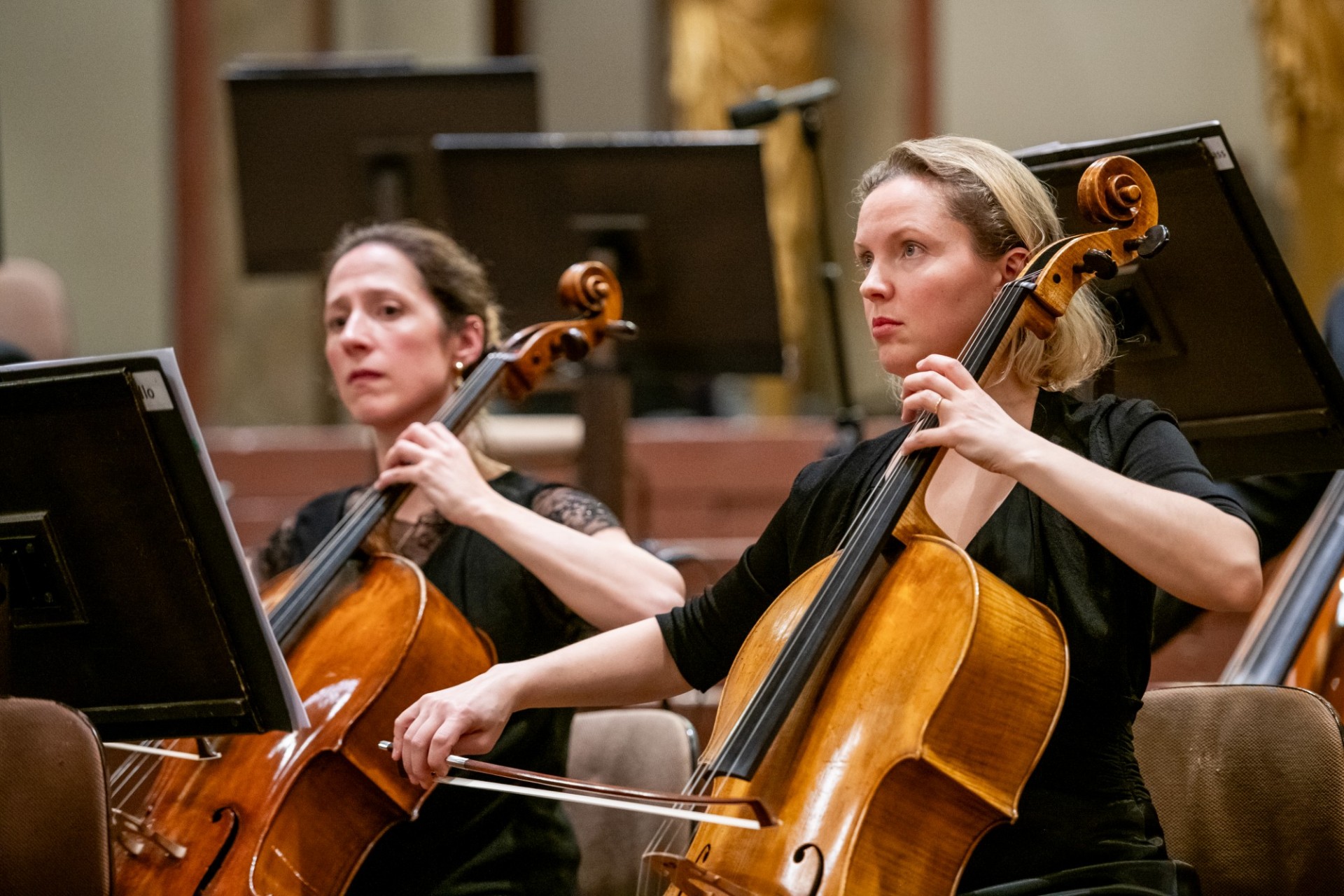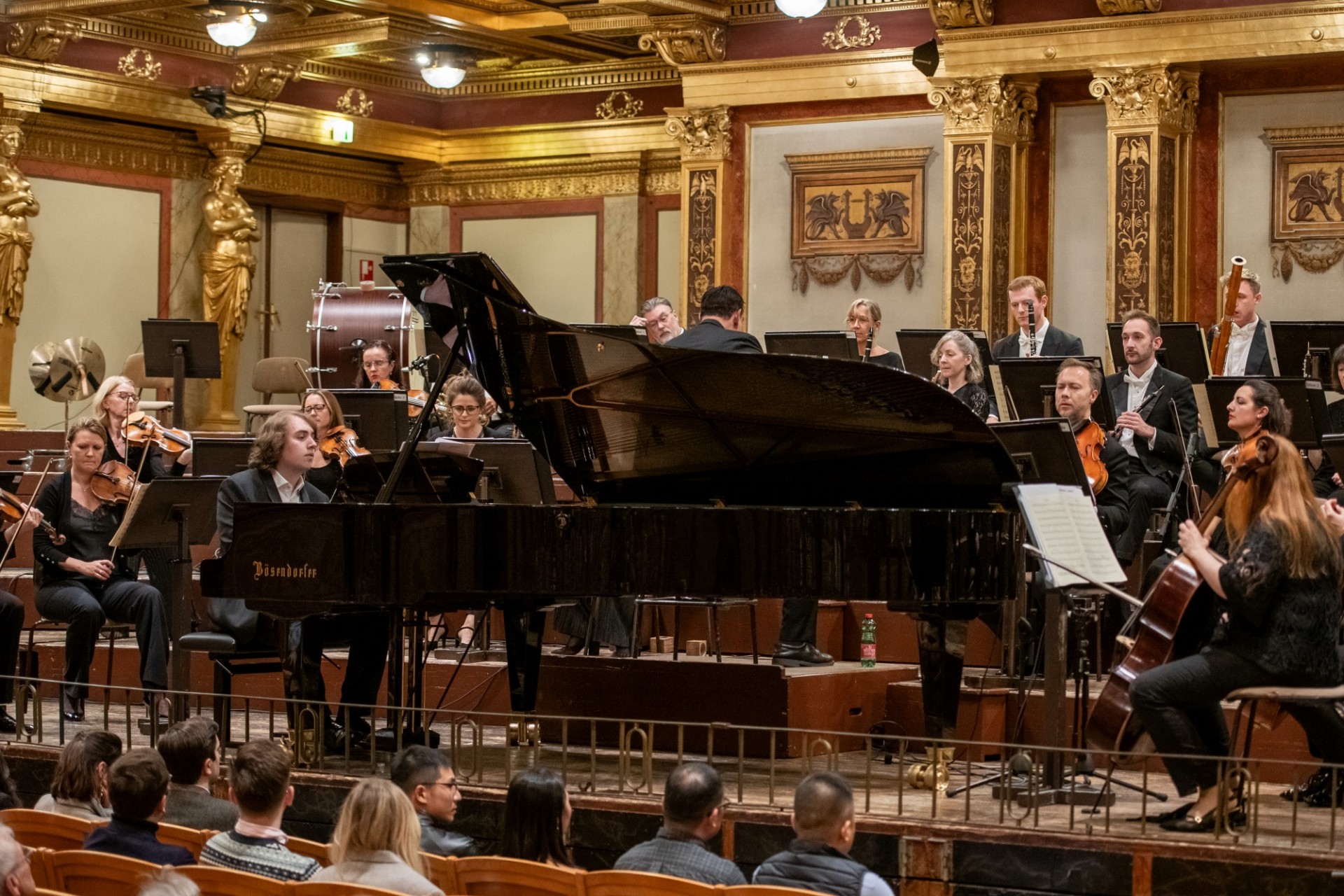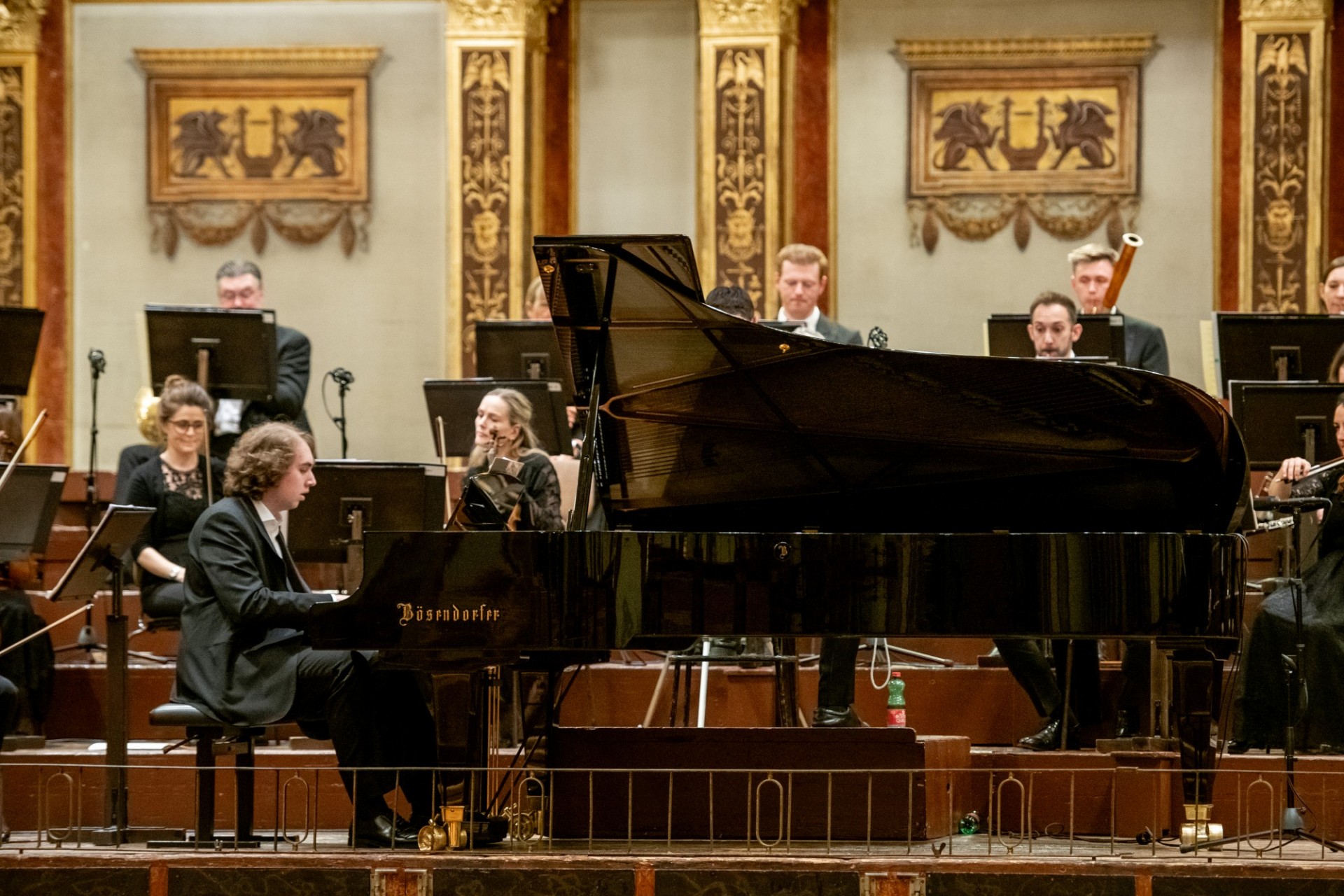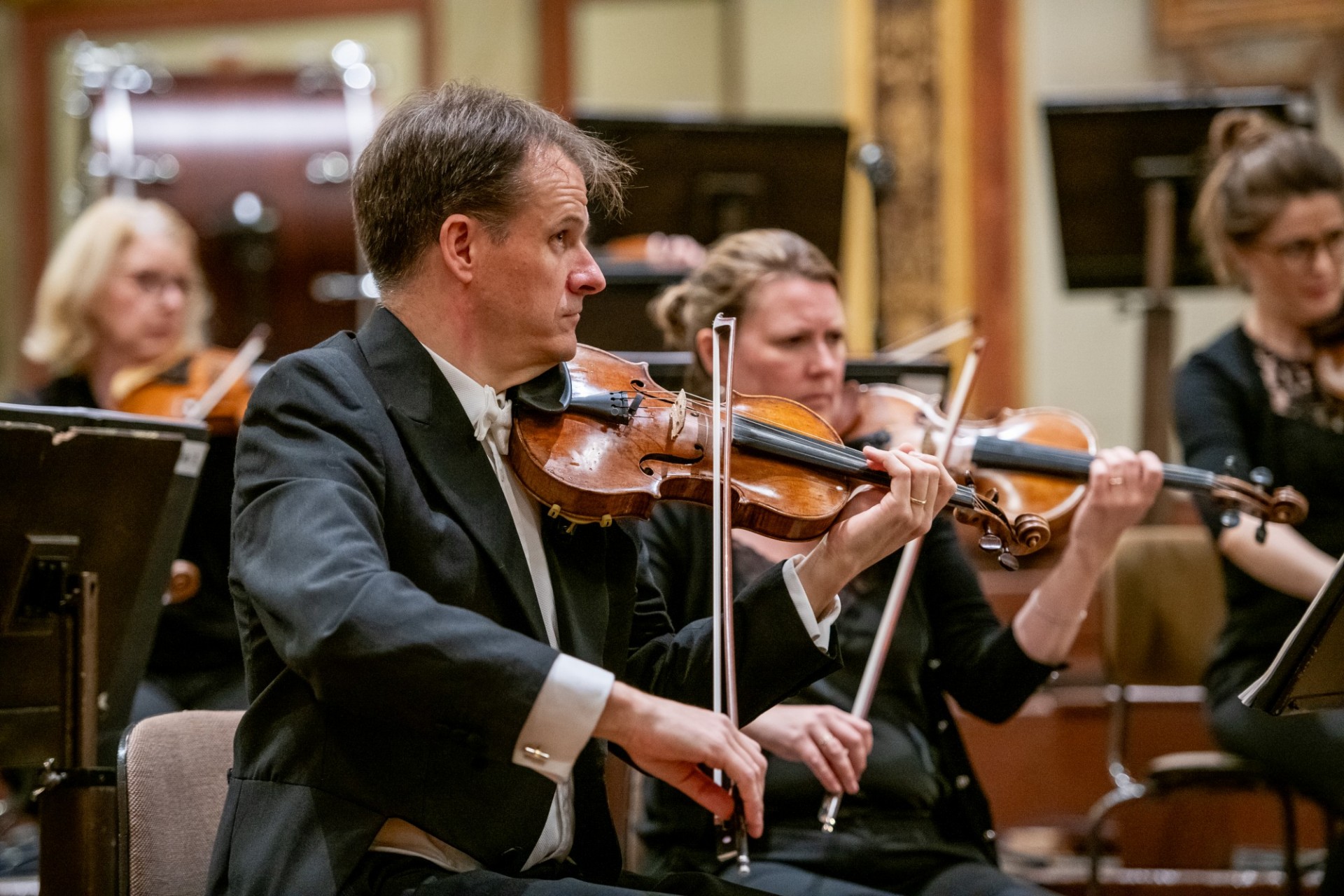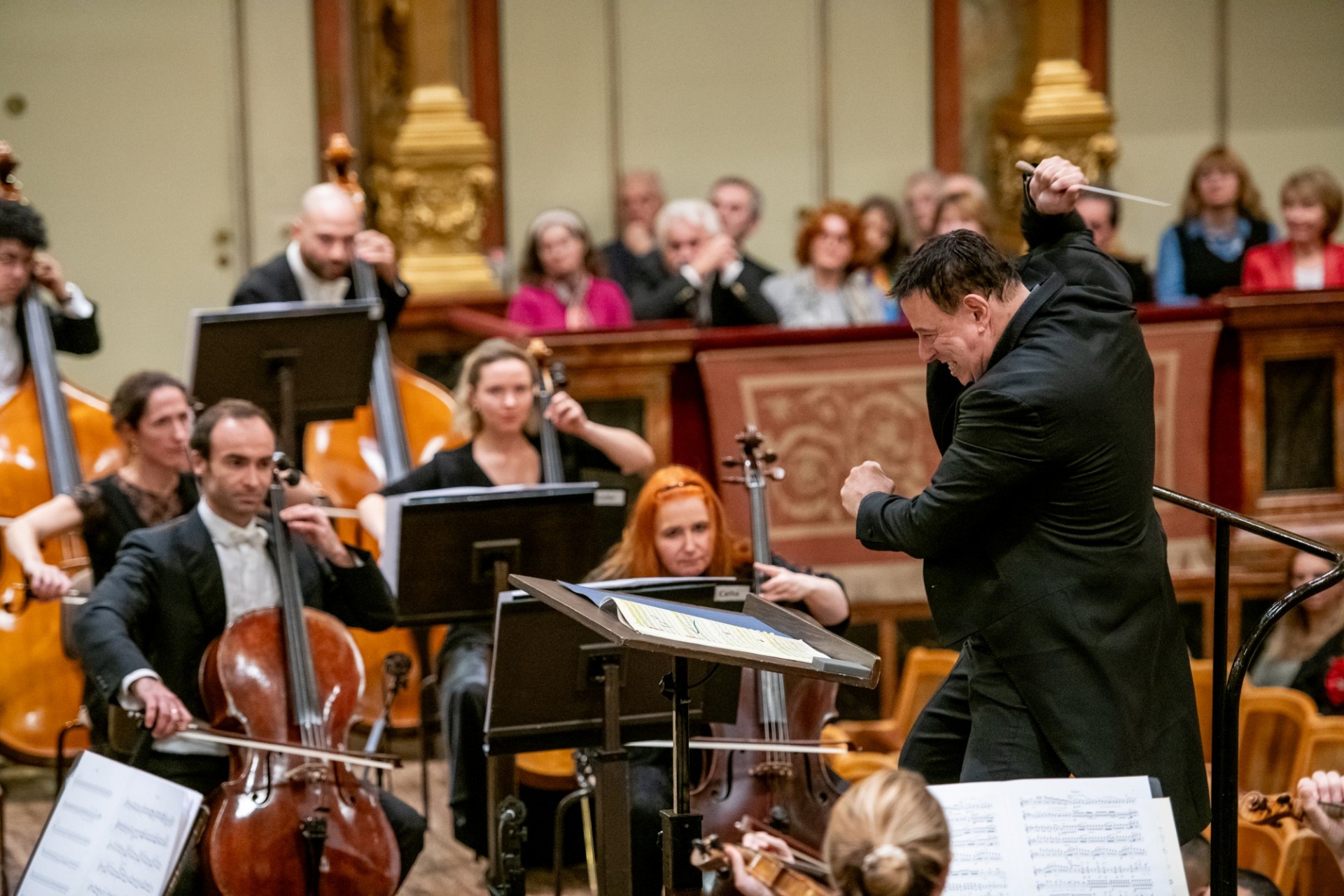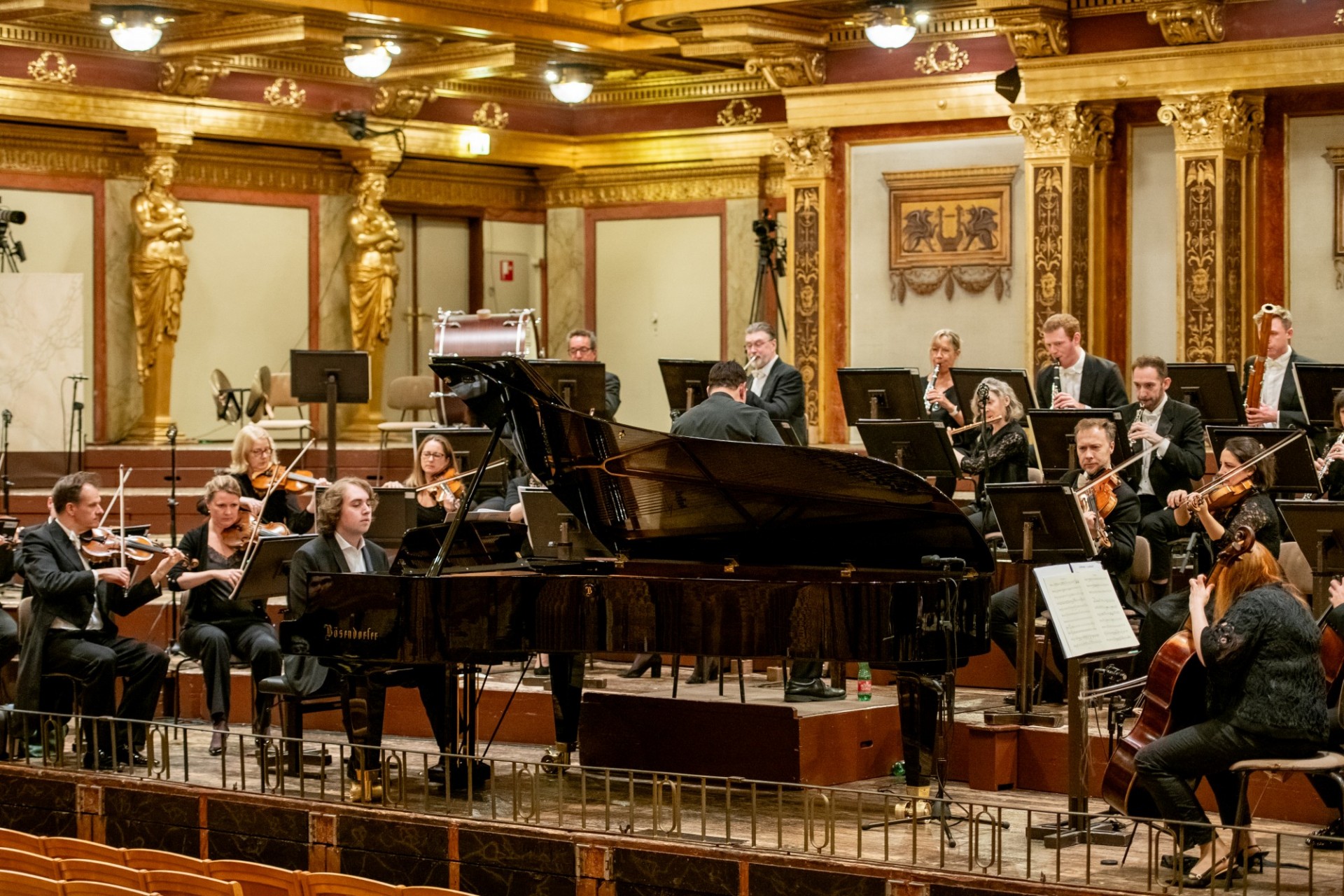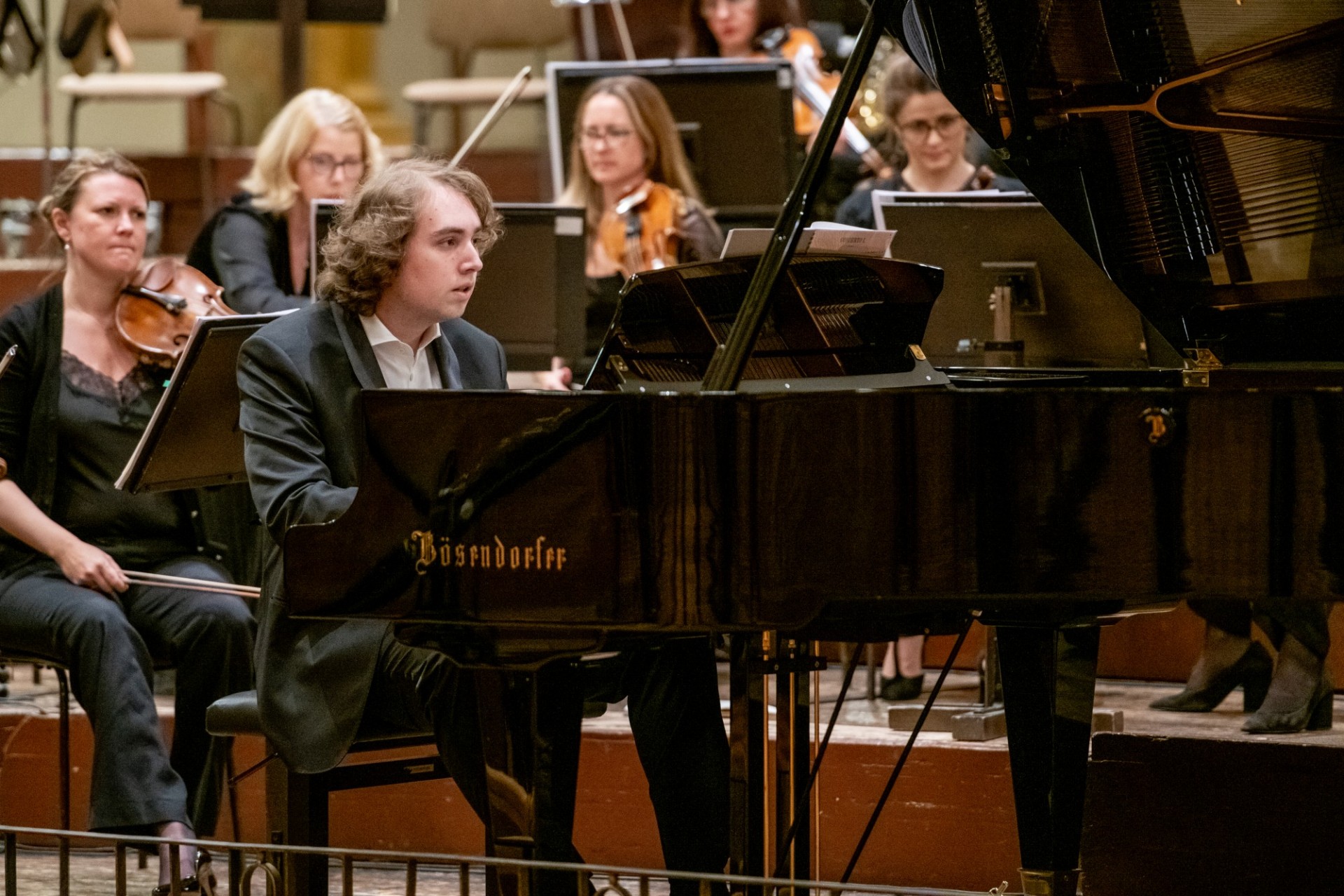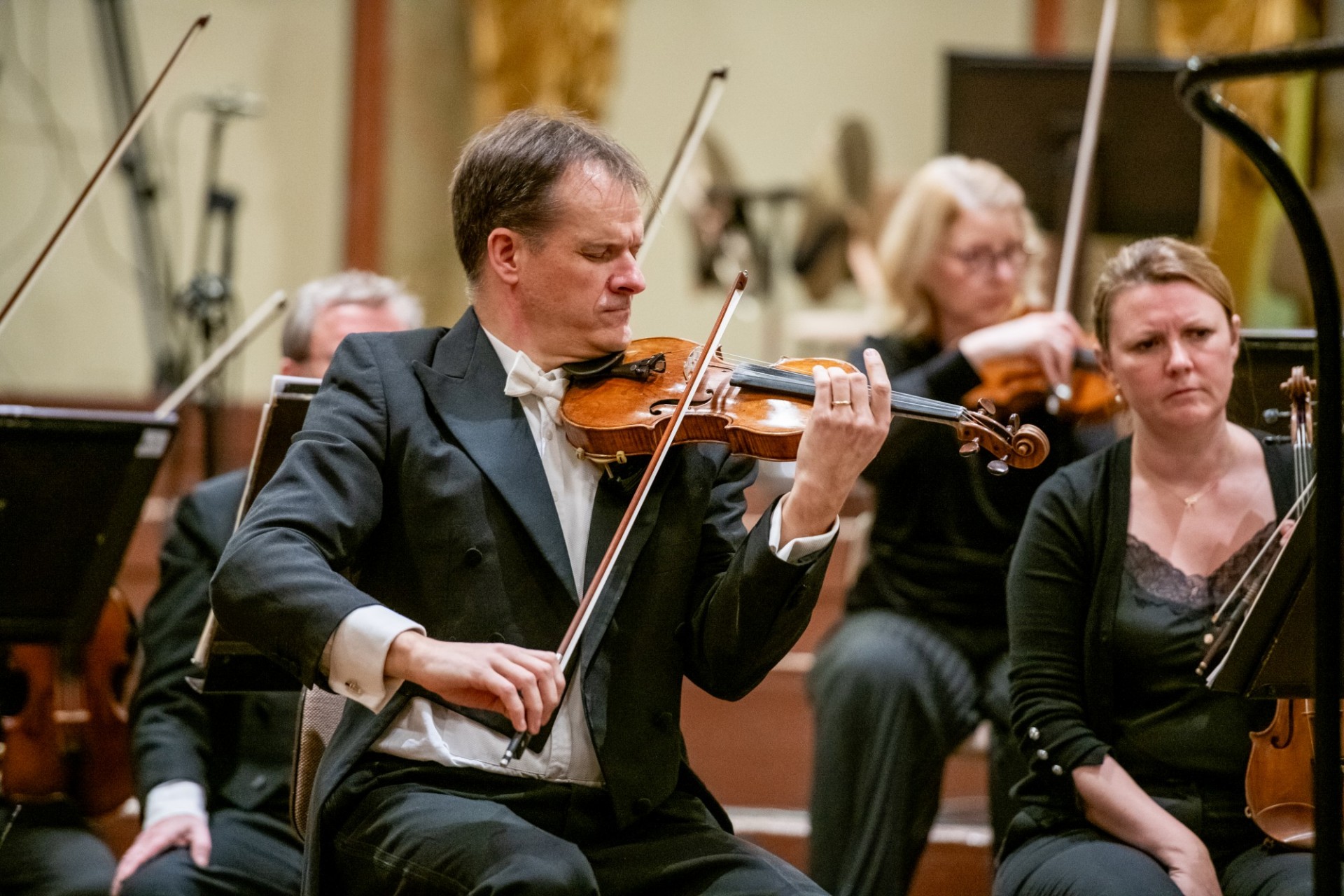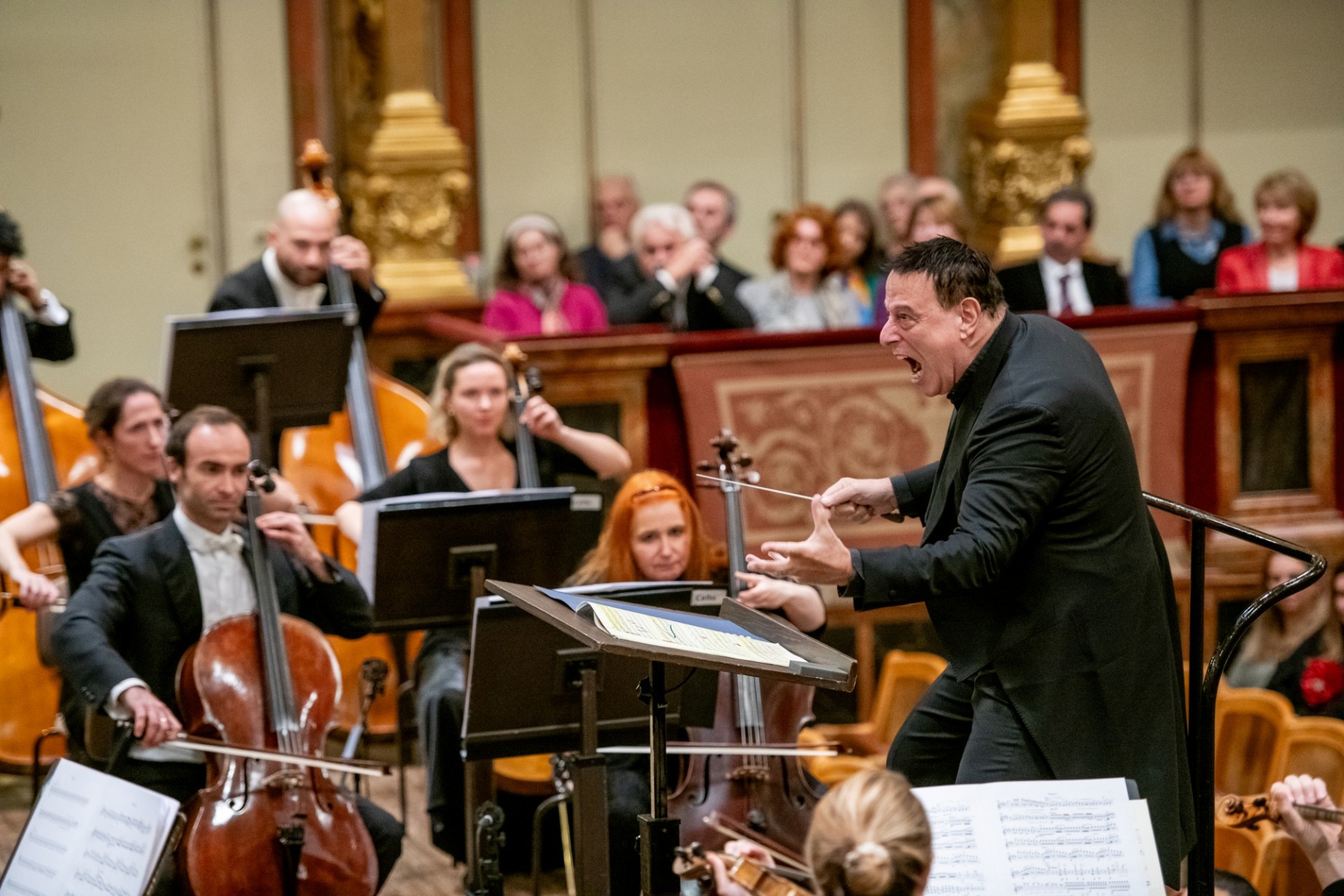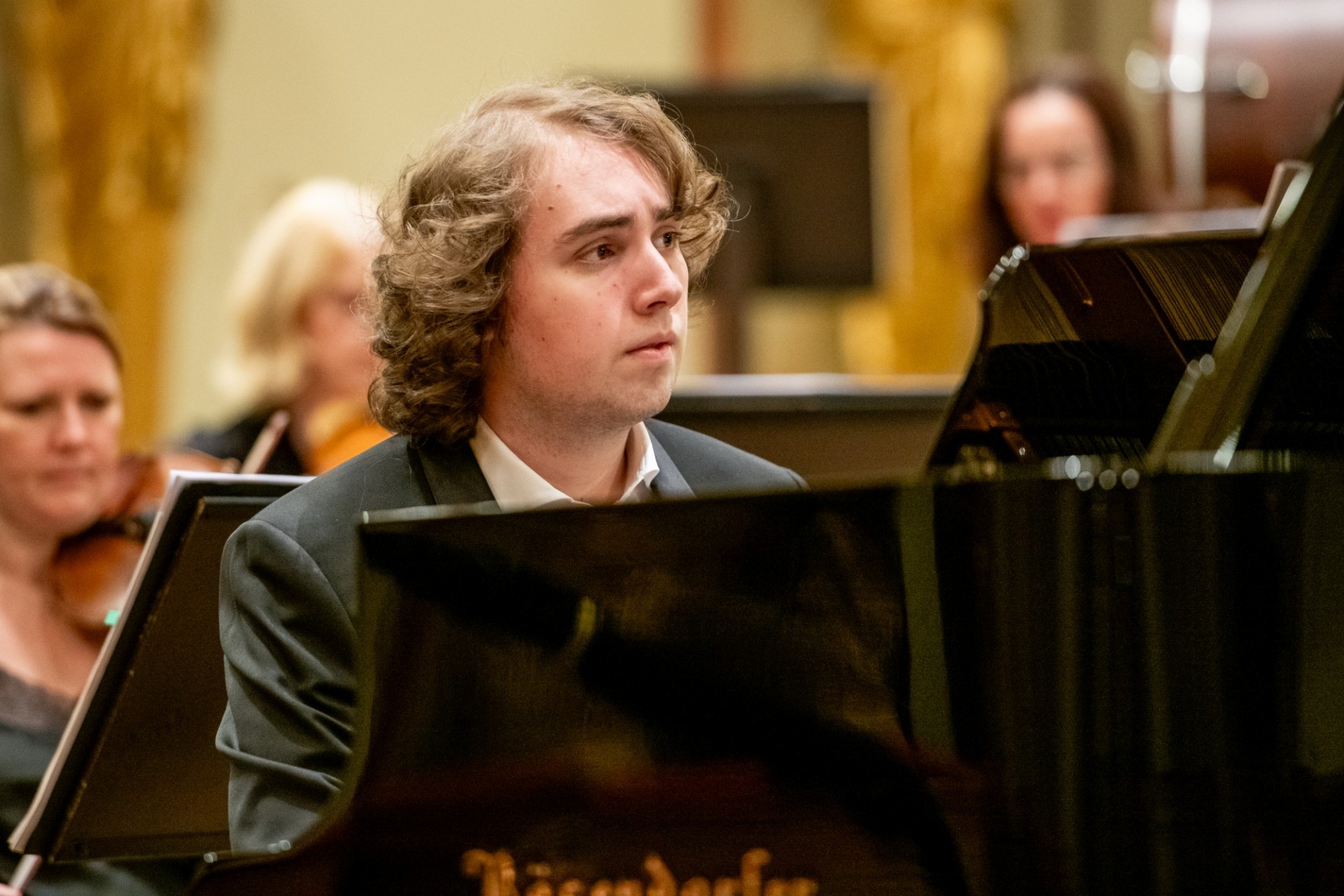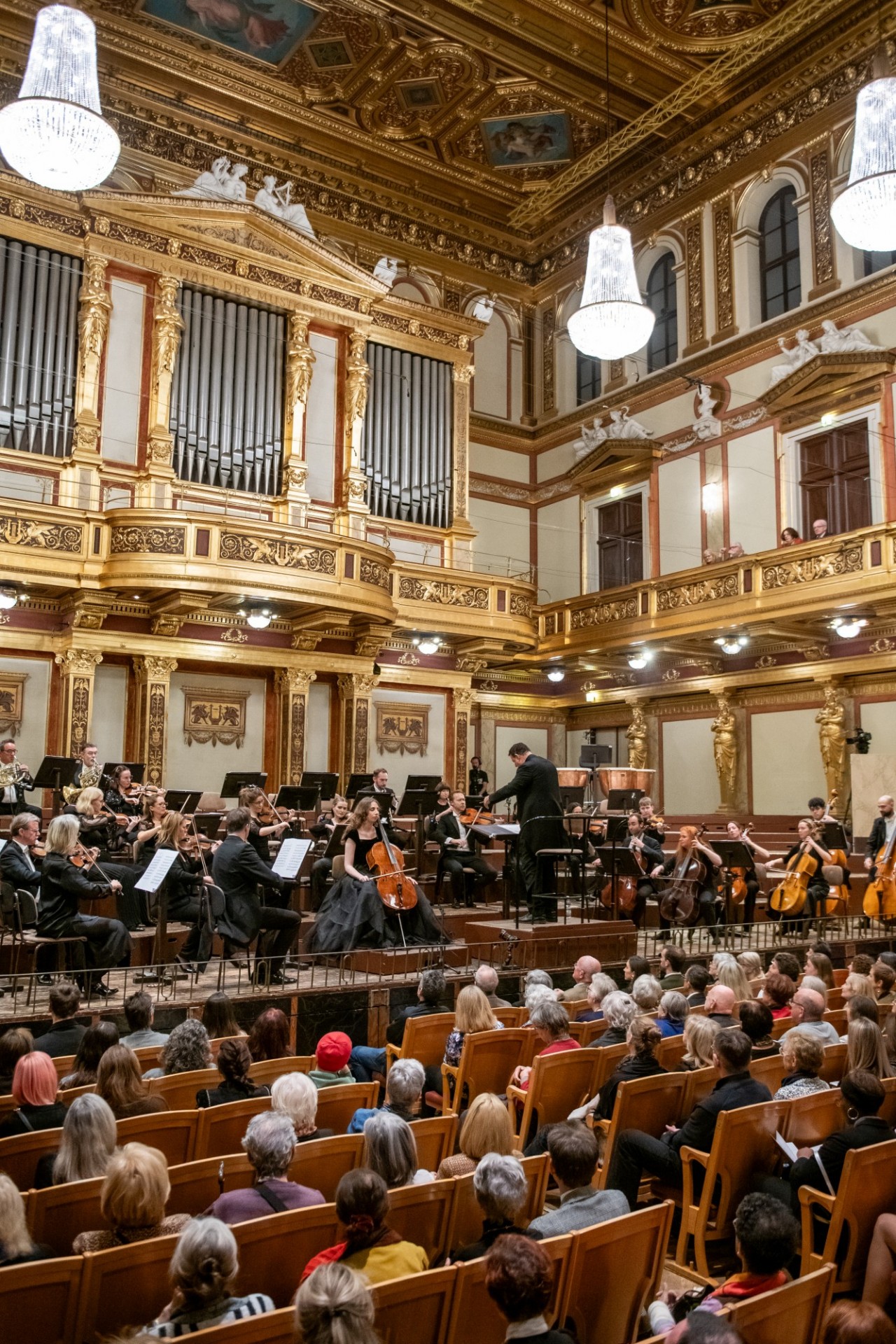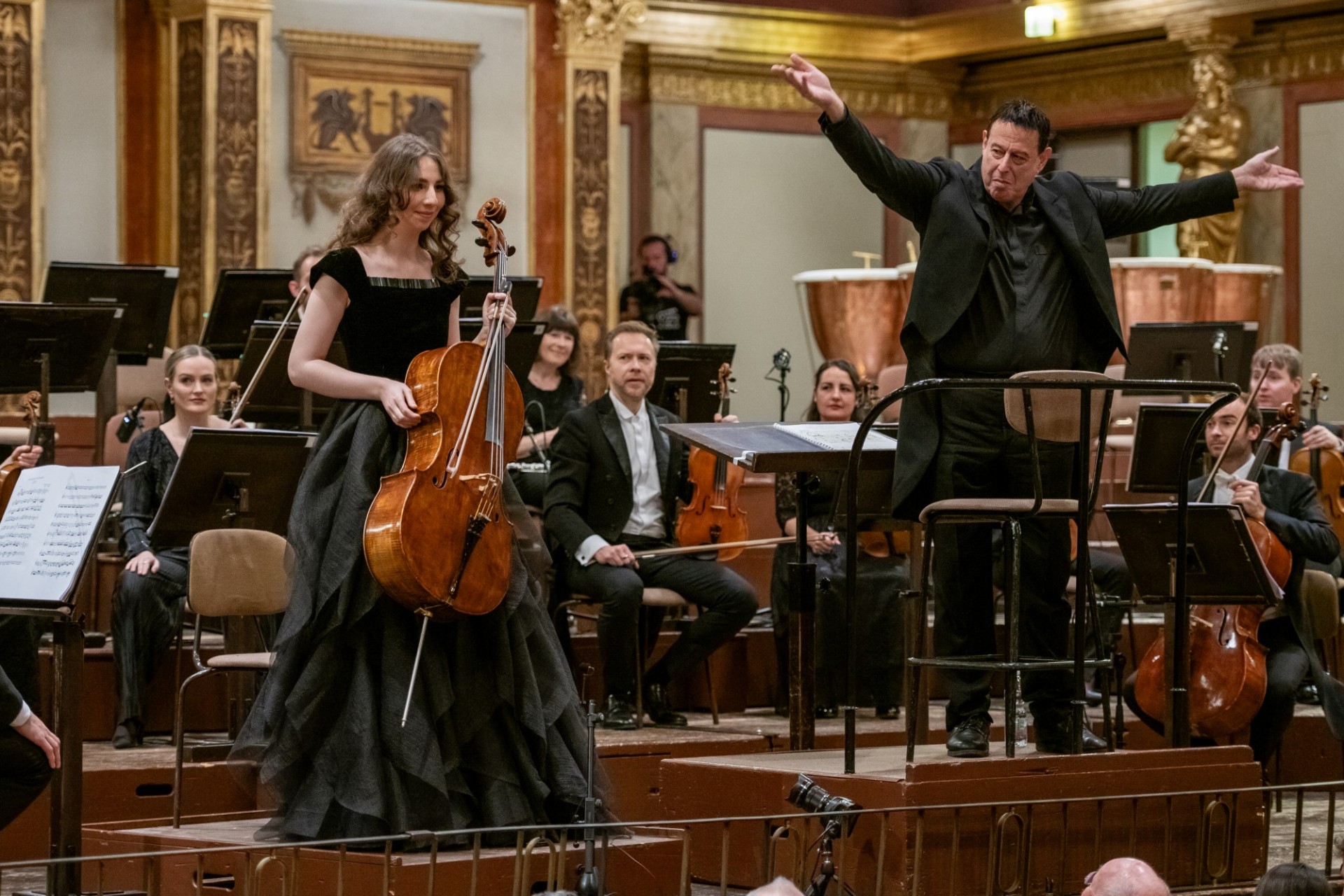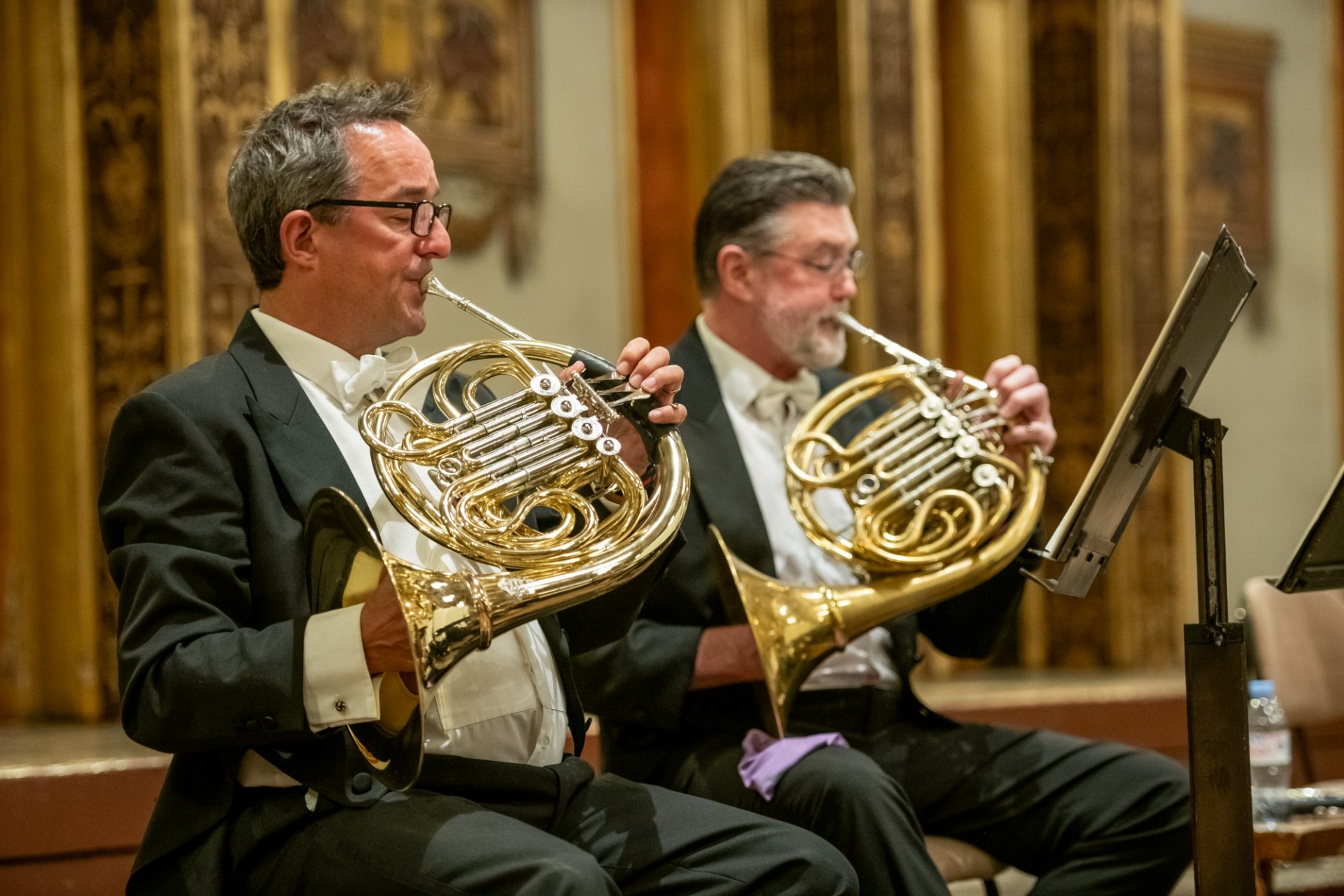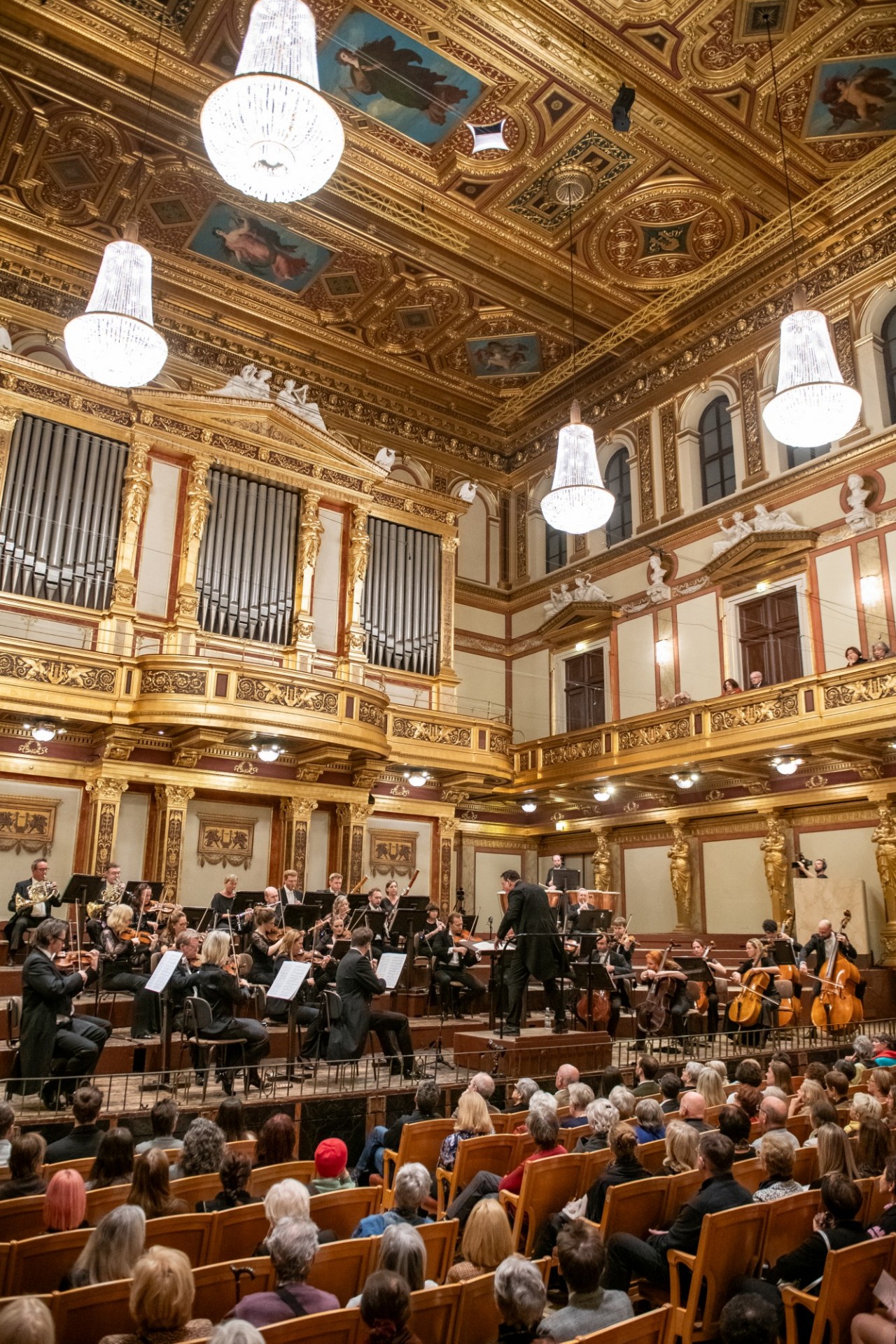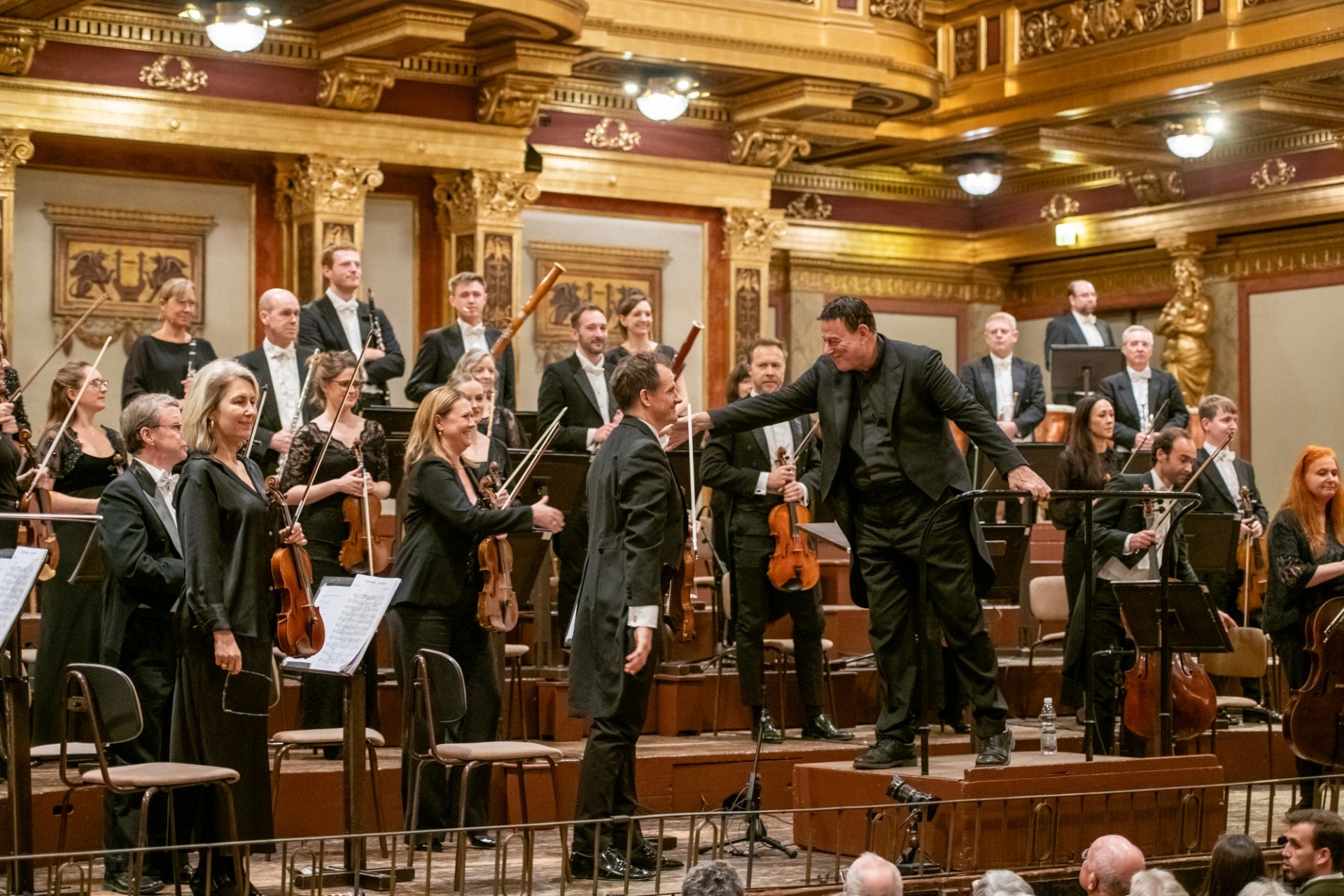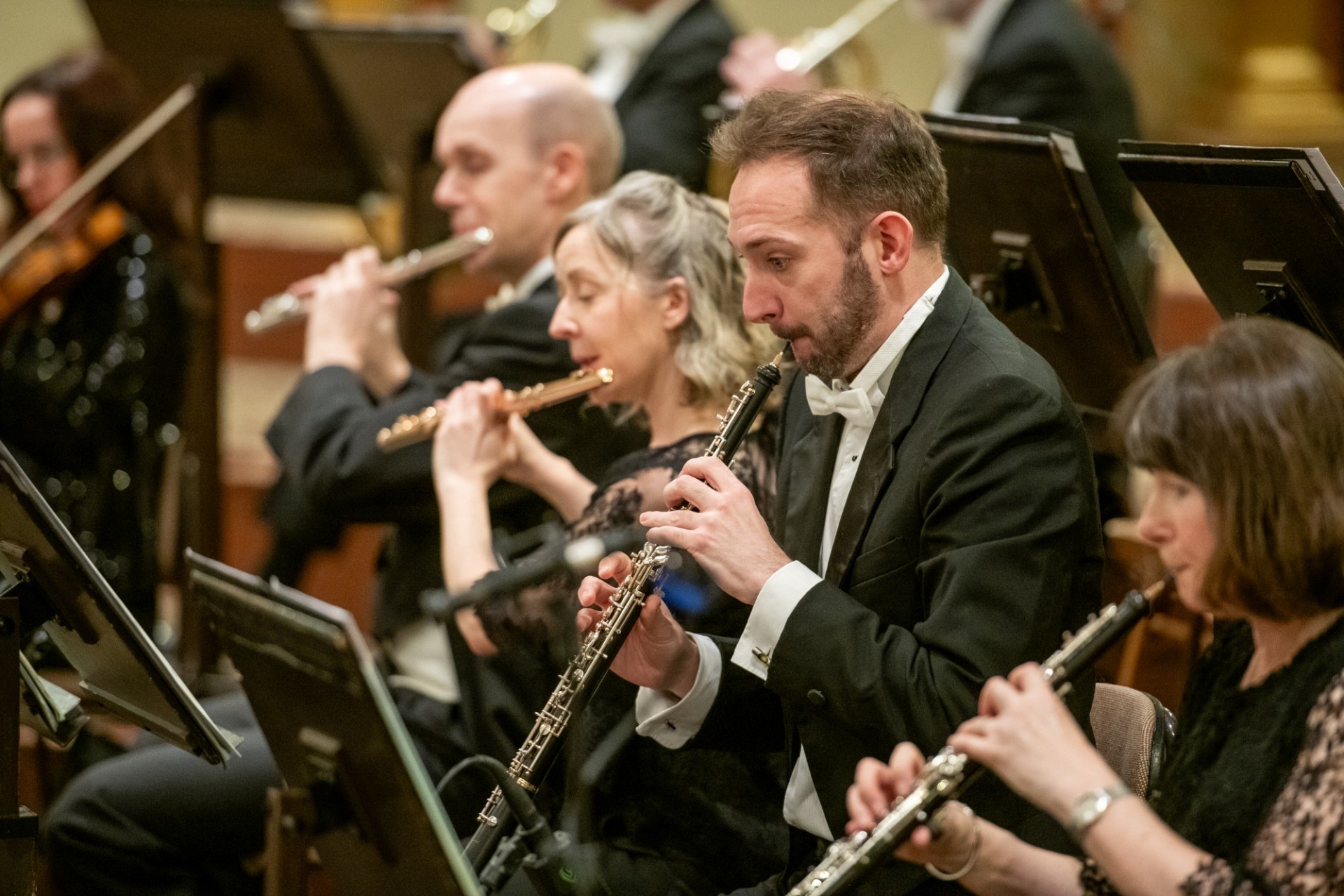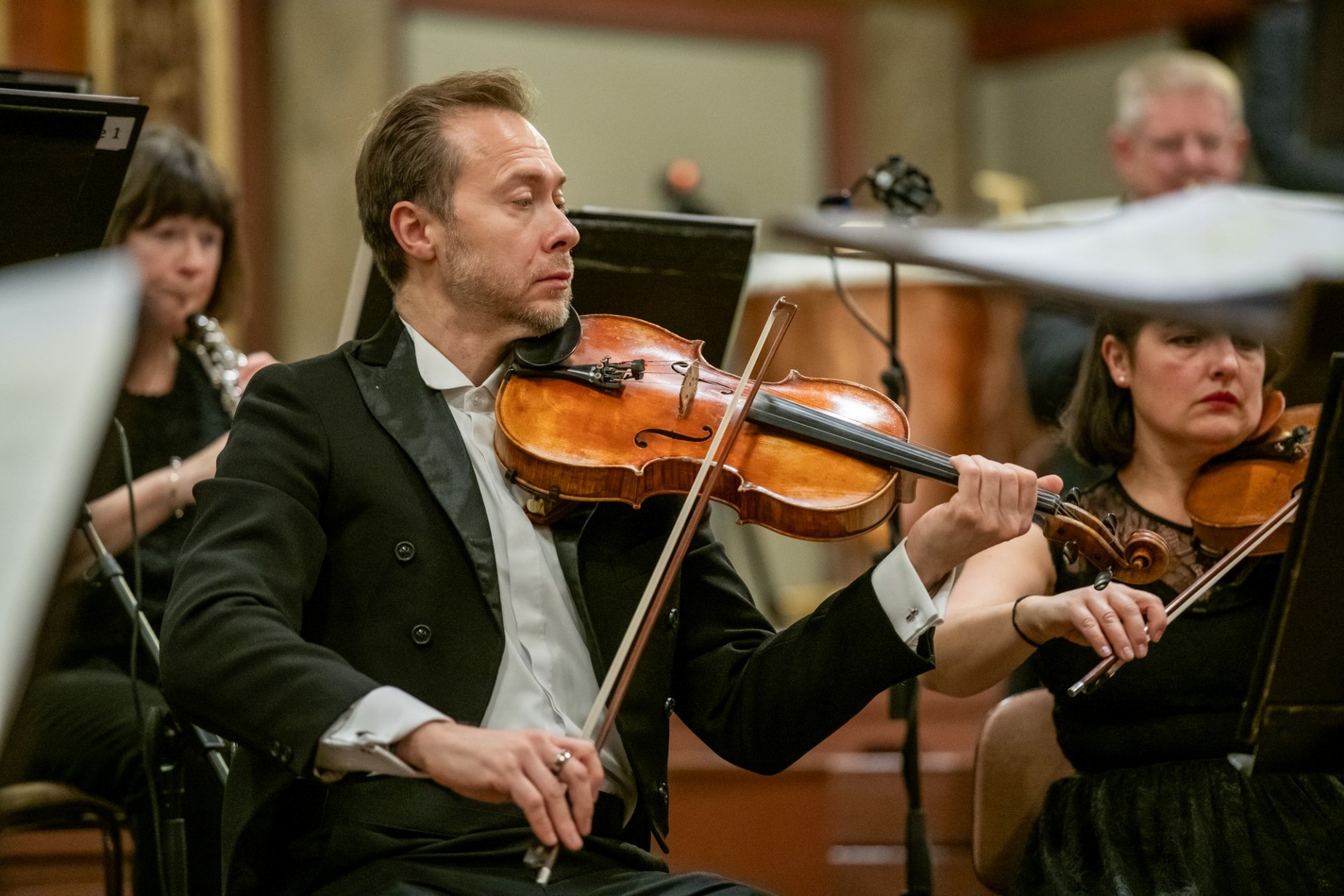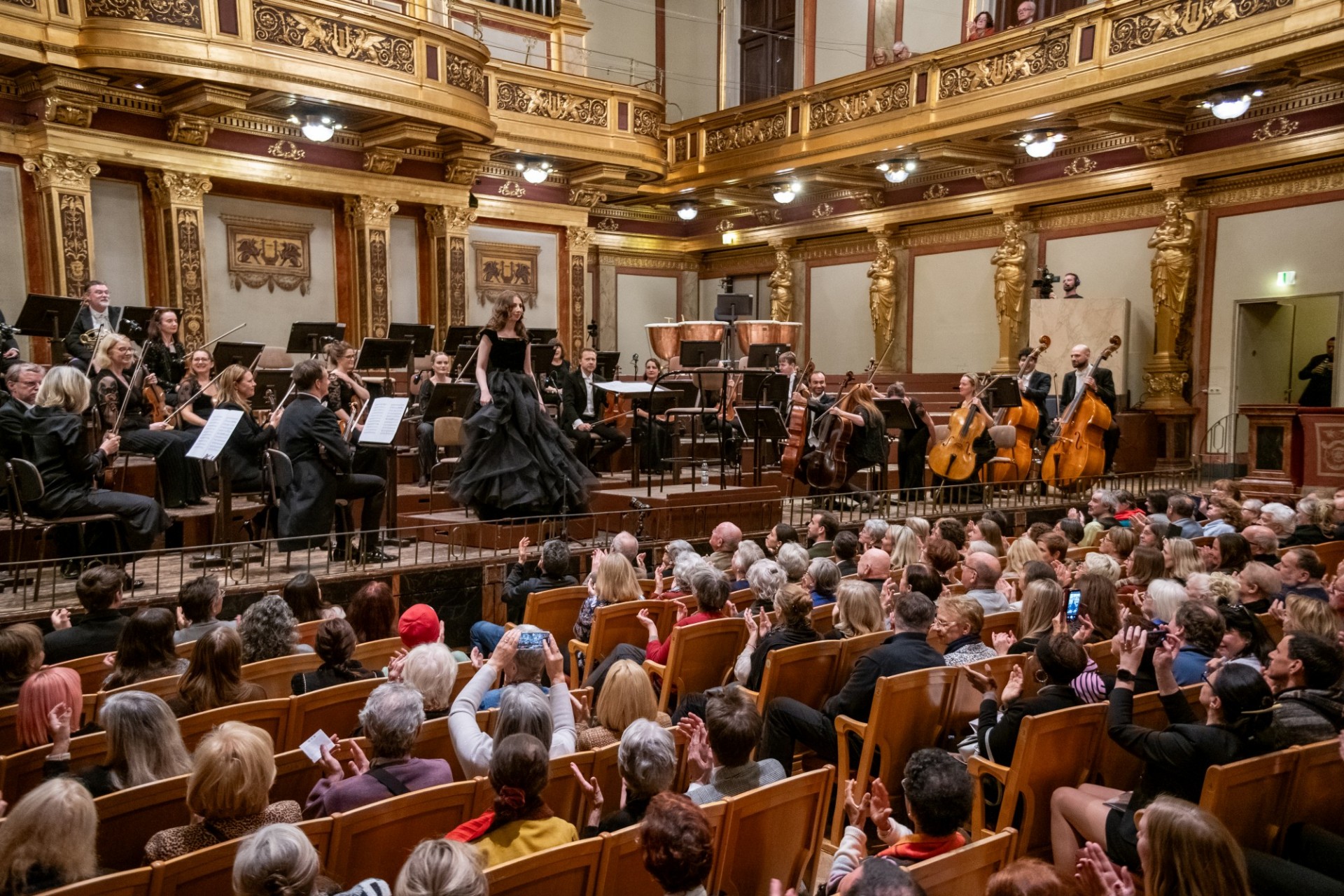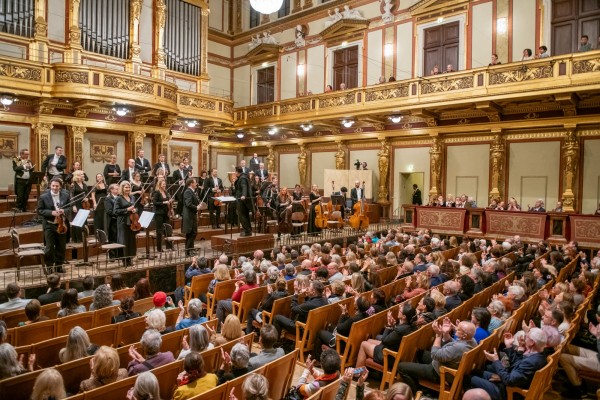
Covent Garden Sinfonietta performed at Musiikverein Golden Hall in Venna.
November 12, 2024
Covent Garden Sinfonietta
The Covent Garden Sinfonietta that consist of best musiccians of the famous Royal Opera House Orchestra Covent Garden, celebrated for its versatile repertoire and exceptional artistry. Since its inception, the ensemble has garnered acclaim for its performances that span a broad musical spectrum, from Baroque masterpieces to contemporary compositions. The orchestra is known for its commitment to musical excellence and for working with internationally renowned conductors and soloists. Performing in prestigious venues across the world, the Covent Garden Sinfonietta has become a beacon of cultural exchange, enchanting audiences with its dynamic interpretations and profound connection to music. Years 2023 and 2024 the orchestra performed series of concerts at the Golden Hall Musikverein in Vienna that were highly acclaimed by both audience and critics (see below)
Musikverein Golden Hall in Vienna
The Musikverein Golden Hall, located in Vienna, Austria, is a cultural and architectural jewel revered by musicians and music lovers worldwide. Renowned for its breathtaking acoustics, the Golden Hall serves as the home of the Vienna Philharmonic Orchestra and has hosted countless legendary performances since its opening in 1870. Designed in the opulent style of the Historicist era, the venue is celebrated for its ornate details, including gilded ceilings, crystal chandeliers, and classical sculptures. As a hub of classical music, the Golden Hall attracts the finest artists, making it a dream stage for performers and an unforgettable experience for audiences. Its rich history and prestige continue to uphold its status as one of the world’s most iconic concert halls.
Review by Dr. Daniel Floyd
Viennese Classicism: Real and Reinvented
The title of my review refers to the perspectives on the music of the Viennese Classicism that comprise the program performed by the Covent Garden Sinfonietta on November 12, 2024 in the Great Hall of the Vienna Musikverein. Daniel Oren conducted the London-based ensemble in a lively and delightful interpretation of the eclectic selection of a symphony, a concerto and ballet music. Two of the compositions performed were written between the 1760s and 1780s, while the third, dating from the second decade of the twentieth century, was loosely inspired by the music of the era represented by the two earlier works.
The First Symphony in D major, Op. 25, premiered in Petrograd on April 18, 1918 under the composer's baton, was written by Sergei Prokofiev in stylistic imitation of Franz Joseph Haydn and Wolfgang Amadeus Mozart, without directly imitating either of them. Interestingly, the third movement of Prokofiev's symphony ends with "Gavotte: Non troppo allegro" instead of the minuet that often took its place in four-movement symphonies of the Viennese Classical period. The Covent Garden Sinfonietta opened the concert with an energetic performance in which the flutes and trumpets particularly stood out.
Coincidentally, Prokofiev's symphony is contemporary with the operas of Richard Strauss - Der Rosenkavalier (1911) and the prelude to Ariadne auf Naxos (1916), both set in Hugo von Hofmannsthal's historical fictions of 18th-century Vienna. While Strauss took full advantage of the possibilities of the modern orchestra and deliberately incorporated anachronistic elements, such as the Viennese waltzes in Der Rosenkavalier, Prokofiev used an ensemble of a size roughly equivalent to that available to 18th-century composers. Although no work by Strauss was performed at the concert reviewed here, it is worth noting that Prokofiev offered an interesting contrast to the "neoclassicism" of his older contemporary.
A real discovery of the evening was the performance of cellist Dali Gutserieva in Haydn's Cello Concerto in C major (Hob. VIIb:1). The concerto was probably composed between 1761 and 1765 for Joseph Franz Weigl, then principal cellist of Prince Nicolaus Esterházy's orchestra. The work was thought to be lost until a copy was rediscovered in the Prague National Museum in 1961 and given its first modern performance a year later. Gutserieva's supple playing and clear articulation lent even more energy to the already lively, rhythmically dance-like concerto. The Covent Garden Sinfonietta provided attentive and thoughtful accompaniment that did justice to the masterful orchestration of the then young Haydn.
After the interval, there was a complete performance of Mozart's ballet music, K. 367, for the original version of the opera "Idomeneo, re di Creta", which was premiered in 1781 at the Residenztheater in Munich. Ballets performed in conjunction with an opera were usually not by the composer of the opera, so Mozart's ballet music was an exception to the usual practice of the time. The surviving music consists of five movements: Chaconne, Pas seul de Mr. Le Grand, Passepied, Gavotte and Passacaille. Since many modern productions of this opera omit the ballet at the end, it was a pleasure to hear it in concert and without the distraction of modern choreography. The Covent Garden Sinfonietta played with fluid tempos that kept the music moving without becoming hectic. It was evident throughout that these movements had to be danceable.
The audience's enthusiasm was rewarded with an encore: the Overture to "Le nozze di Figaro", K. 492. Oren and the Covent Garden Sinfonietta interpreted this often performed overture, which always remains fresh, never ages and never fails to excite, with great passion and gusto.
Review by Dr. Daniel Floyd / Editor DAS OPERNMAGAZIN
Review by Samir H. Köck
Refinement to the most delicate lyrical detail
The Covent Garden Sinfonietta, under the baton of its maestro Daniel Oren, made the Wiener Musikverein resonate with a two-night performance on 10 and 12 November. The siblings Adam Gutseriev (piano) and Dali Gutserieva (cello) excelled as soloists.
‘The Golden Hall is one of the most fascinating rooms for performing music. I would even go so far as to say that the Musikverein is a kind of temple’, raved Maestro Daniel Oren before the Covent Garden Sinfonietta’s guest performance in Vienna. Since 1870, the building, conceived by architect Theophil Hansen, has become the epitome of performances of the highest artistic excellence. Hence, the two performances by the British ensemble were also very special for the musicians.
First evening – Sunday, November 10, 2024
Rossini – Overture to the opera The Barber of Seville: As a festive prelude, the experienced conductor chose the wonderfully lavish overture to the opera The Barber of Seville, written by Rossini when he was only 24 years old and completed in just two weeks. The orchestra immediately played with verve. Breathing, finely structured and with utmost precision. The audience was quickly swept away by the reciprocity of competing emotional states. In a sophisticated manner, the noble merged with the comical and was refined to the last lyrical detail. Despite the considerably accelerated performance, the Covent Garden Sinfonietta never lacked grace. The well-known delicate theme was repeated in a subtle manner until it crescendoed to a whirling climax of the full orchestra. A cheerful mood spread across the auditorium.
Beethoven: – Piano Concerto No.1 in C major, Op.15: This storm of emotions gave the attentive audiences the ideal warm-up for Beethoven’s Piano Concerto No.1 in C major, Op.15, an early work that plays with sharp contrasts but at the same time shows tremendous rhythmic precision. Pianist Adam Gutseriev, born in 2005, is a winner of many international competitions. The orchestral introduction, with its sweeping gestures and march-like interludes, soon drew the listener’s attention to the keyboard. Gutseriev, who seemed rather introverted in his personal aura, surprised with a vibrant touch and a strong will for expression in the first movement Allegro con brio. In the second movement Largo, the young pianist explored the lyrical aspects in a passionate dialogue with the orchestra. The light-hearted subtlety that Gutseriev brought to the work was captivating. In the third movement, the dance-like Rondo, allegro scherzando, his playing soared to delightful heights. As if freed from all earthly heaviness, his fingers danced over the black and white keys, celebrating life. Especially delicate was the artful fading away of the piano. The music wove its way through a single moment of silence. The orchestra set the subtle final accent here.
Tchaikovsky – Souvenir de Florence, Op.70: Tchaikovsky’s romantic chamber music gem, Souvenir de Florence, Op.70, brought the first evening to a delightful conclusion. The piece was originally composed for a sextet in 1890 during a stay in the city that lends its name to the work. But the music is also ideally suited for interpretation by larger ensembles. Conductor Oren, passionately in charge, gave his musicians direction and at the same time scope for development.
The buoyant style had autumnal fog-drifting momentum, especially as the double basses seemingly drove the strings forward. The Allegro moderato was played with grandezza, the Allegro vivace virtually jubilant. The lively cheerfulness conjured up by the Covent Garden Sinfonietta embodied the ensemble’s basic approach: the music reflects a wide range of emotions without ever itself being pretentious. Judging by the intensity of the ovation, this evening’s performance was a delightful experience for the audience, and as everyone knows, audiences in Vienna are always particularly critical.
Second evening – Tuesday, November 12, 2024
Prokofiev – Symphony No.1 in D major, Op. 25 ‘Symphonie classique’: Maestro Daniel Oren was discovered by Leonard Bernstein at the age of 13 for a singing role. Bernstein would remain Oren’s most important influence. True to the legendary American’s credo, Oren communicates the music with every fibre of his body. With his expressive facial expressions, sweeping gestures and occasional leaps, the 69-year-old led the musicians entrusted to him to peak performance. It should be noted that Prokofiev’s Symphony No.1 in D major, Op.25 ‘Symphony Classique’, was one of Bernstein’s favourite pieces. He thought of it as a prime example of humour in music. It is thanks to the accessibility of this symphony that segments from it were used as signatures for television programmes in the German-speaking world. The Covent Garden Sinfonietta was particularly charming when playing this popular work, which Prokofiev deliberately conceived in the spirit of Joseph Haydn, primarily through its daringly exuberant elegance. Flutes and trumpets made a big impression here. This entertaining piece proved to be the ideal terrain for this vivacious ensemble, bringing out even the tiniest details of the score.
Haydn – Concerto for cello and orchestra in C major, Hob.VIIb:1: According to music history, the concerto was written between 1761 and 1765 for Joseph Franz Weigl, who was the principal cellist in Prince Nikolaus Esterházy’s orchestra at the time. For many years, the work was believed to have been lost. 1961 a copy of it was rediscovered in the National Museum in Prague and 1962 it was performed again for the first time in a long time. Since then this concerto has enjoyed great popularity. A good reason to celebrate it in its sumptuous sonority. Following a beautifully performed introduction, the Covent Garden Sinfonietta indulged for several minutes in refined melodious sound.
Appearing as soloist was cellist Dali Gutserieva. Like her brother Adam, she too has won numerous international competitions. The 25-year-old began her musical career at the young age of six and has performed with the Danish Royal Opera Orchestra and Russian National Philharmonic Orchestra, among others. More recently, she appeared with the Latvian Philharmonic Chamber Orchestra in a number of major European cities. With her wonderfully nuanced tone, Gutserieva highlighted several motifs from the exposition and varied them with great charm. She approached and expanded the Adagio with a sensitivity that went straight to the heart. With great devotion, she immersed herself in the second movement’s melodic beauty. In the Allegro molto, Gutserieva also showed that she is equally at home in lighter styles. Every now and then, a tender smile flickered across her face. Horns and oboes added an enticing sensuality to the performance. When such life-affirming music fills the air, a joyful atmosphere in the hall is an absolute must.
Mozart – Ballet music for the opera Idomeneo: As a finale, the British band celebrated Mozart’s ballet music from the opera Idomeneo, inspired by Christoph Willibald Gluck. In no small part, to allow the magnificent sound to unfold once more in the beautiful hall. Stirring crescendos and tutti passages quickly elevated the spirits of those present. The energetic Chaconne was crisply phrased, with strict dance-like movements and very differentiated dynamics. Two dances were omitted and the programme went straight to the dramatic Pas seul, in which the horns play a starring role. In the elegant Passepied, the strings once again took care of the ennoblement. The tender gavotte melodies were engulfed by powerful intensifying waves. Subtle repetitions increased the excitement and atmosphere, allowing new perspectives time and again. Maestro Oren always kept an overview of the effect of the cues, no matter how heated passions became. He dosed them cleverly. Last but not least, the majestic Passacaille, in which the ensemble was given the opportunity to savour a minor key. After a brief moment of moving silence, the audience broke into thunderous applause. The standing ovations of the Viennese audience were repaid with an enchanting-sounding encore – an evergreen, the overture to Le nozze di Figaro, a truly timeless piece.
The Covent Garden Sinfonietta under Maestro Oren had given a second inspiring performance with its cleverly selected, eclectic programme of symphony, concerto and ballet music, all of which either represented, referred to or reflected the Viennese classical aesthetic to a greater or lesser extent. Everything was masterfully arranged and played with gusto. The orchestra were returning to the Golden Hall for a second year and one can only hope that these outstanding musicians will be able to return next year as well.
Samir H. Köck (Review translated by Alexander Moore)